
10 min read · ✓ Personally tested
Katori Titanium Cutting Board: Does It Actually Work? What 2026 Users Should Know
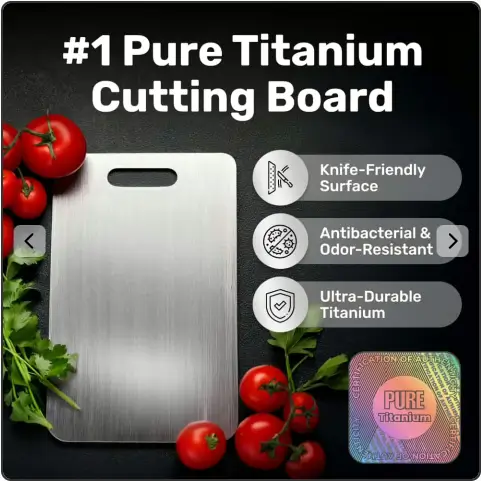
The short answer
- Solid titanium, no bacteria-trapping grooves like wood or plastic
- My chef's knife is still sharp after two months of daily use
- No lingering onion or garlic smell, even after fish
I'm Emma, I've been cooking dinner for my family every night for over 30 years out of a small kitchen in a small town. I went through six cutting boards in the last decade alone before I finally tried this one, and I'm writing this so you don't waste money the way I did. When I'm not in the kitchen I'm usually out in my garden or watching my grandkids for the afternoon.
My experience with it
I'll be honest, I was skeptical. I've bought bamboo boards, plastic boards, even a glass one that I hated because it made my knife sound like nails on a chalkboard. When I saw 'titanium cutting board' I figured it was just another gimmick with a fancy name slapped on it, so I only ordered one because the guarantee made it feel low-risk.
Week one, I honestly didn't notice much. It felt light in my hand, almost too light, and I wondered if I'd wasted my money on something flimsy. It wasn't until the second week, after cutting garlic and then salmon back to back, that I realized I wasn't smelling either one on the board afterward — that's when I started paying real attention.
By the end of the first month, the thing that got me was my knife. I hadn't sharpened it once, and it was cutting through tomatoes just as clean as day one. I've been using it daily since, it still doesn't have a single stain or scratch, and at this point I've told three of my friends to get one too.
What is it?
The Katori Titanium Cutting Board is a prep surface made from titanium instead of wood, bamboo, or plastic. It's double-sided, roughly 2mm thick, and marketed as antibacterial, BPA-free, and knife-friendly. The company's angle is simple: titanium is non-porous, so bacteria, odors, and microplastics have nowhere to hide the way they can in wood grain or scratched-up plastic.
How it works
The idea is pretty straightforward once you get past the fancy word 'titanium.' Wood has tiny grooves that trap bacteria and moisture, plastic scratches easily and creates the same kind of hiding spots, and glass or steel are hard enough to wreck your knife edge with every cut. Titanium sits in a different spot on the hardness scale — hard enough to resist scratching and warping, but not so hard that it dulls your blade the way glass or stone does. Because the surface is non-porous, there's nowhere for juice, bacteria, or odor to soak in, so a quick rinse actually gets it clean instead of just moving the mess around.
What people notice
- Doesn't hold onto onion, garlic, or fish smell after washing
- My knife edge hasn't needed sharpening once since I started using it
- Rinses clean in seconds, no scrubbing grooves like my old wooden board
- Hasn't stained even after cutting beets and tomatoes
- Light enough that I don't dread pulling it out of the cabinet
- Doubles as a serving surface when I have people over
What’s inside
What to expect, week by week
Pros & Cons
Pros
- No odor retention, even after strong foods like garlic or fish
- Kept my knife sharp far longer than my old plastic board
- Rinses clean without scrubbing, no visible knife marks after two months
- Double-sided design actually gets used — raw on one side, produce on the other
- Lightweight enough to lift with one hand and rinse in the sink
Cons
- Only sold through the official site, so you can't grab it at a local store
- It's pricier upfront than a plastic board from the grocery store
- Takes a couple uses to get used to how light and thin it feels compared to a heavy wood board
What customers are saying
1894 verified reviews

“I cook almost every night and this has been the best upgrade to my kitchen in years. It's light, rinses clean in seconds, and hasn't warped or stained like my old plastic board did within months.”

“I didn't think it would actually make a difference but my knives are still sharp months in. No more dull edges after every single use like I was dealing with before.”

“I take mine camping now — works as a cutting surface and a prep table. The best part is not having to scrape food out of grooves when I'm cleaning up at the campsite.”

“After reading about how much bacteria plastic boards can trap I switched over, and I feel a lot better about what I'm prepping food on. Cleanup is way faster too, no more scrubbing corners.”
Is it safe? Side effects
Where to buy safely
I'd only buy this through the official Katori site. It's not sold in stores, and given how many knockoff 'titanium' boards have shown up on marketplaces lately, going through the official page is the only way I'd trust I'm getting real titanium and an actual working guarantee.
Check Price on Official Site30-day guaranteeFAQ
Does the Katori Titanium Cutting Board really work?
In my two months of daily use, yes — it hasn't stained, hasn't held onto smells, and my knife is still sharp. It's not magic, it's just a non-porous material doing what wood and plastic can't.
Is Katori dishwasher safe?
The official page lists it as dishwasher-safe, though I've mostly just rinsed mine by hand since it cleans so fast that way. Either method has worked fine for me.
Does titanium dull knives like glass or steel boards?
No, that's actually the point of it. Titanium sits softer than glass or stainless steel, so it's kept my knife edge in much better shape than my old glass board did.
How long does a titanium cutting board actually last?
It's marketed as a lifetime board, and after two months of daily chopping mine shows zero scratches or warping. I can't speak to 10 years yet, but the build quality so far backs up that claim.
Is it actually antibacterial or is that just marketing?
Titanium is non-porous, so there's nowhere for bacteria to physically get trapped the way it can in wood grain or plastic scratches. I haven't lab-tested it myself, but the logic behind the claim holds up.
Where can I buy the real Katori board safely?
Only through the official website. That's also the only place the 30-day guarantee applies, which matters if you want the option to send it back.
Does it scratch or stain over time?
Mine hasn't so far, even after cutting beets and tomatoes repeatedly. It's held up better against staining than every plastic board I've owned.
Final verdict
I bought this expecting another overhyped kitchen gadget and ended up genuinely using it every day. My knife's still sharp, my board doesn't smell like last week's dinner, and cleanup takes a fraction of the time it used to. With a 30-day guarantee, it offers a low-risk way to see whether it fits your kitchen. Current pricing and availability should be confirmed on the official website.